
Technique
FPV drone vs classic drone: which is right for your video?
Steady or immersive, indoors or out: two ways to film, and how to pick the right one.
By Maxime Palasthy · · 6 min read ·
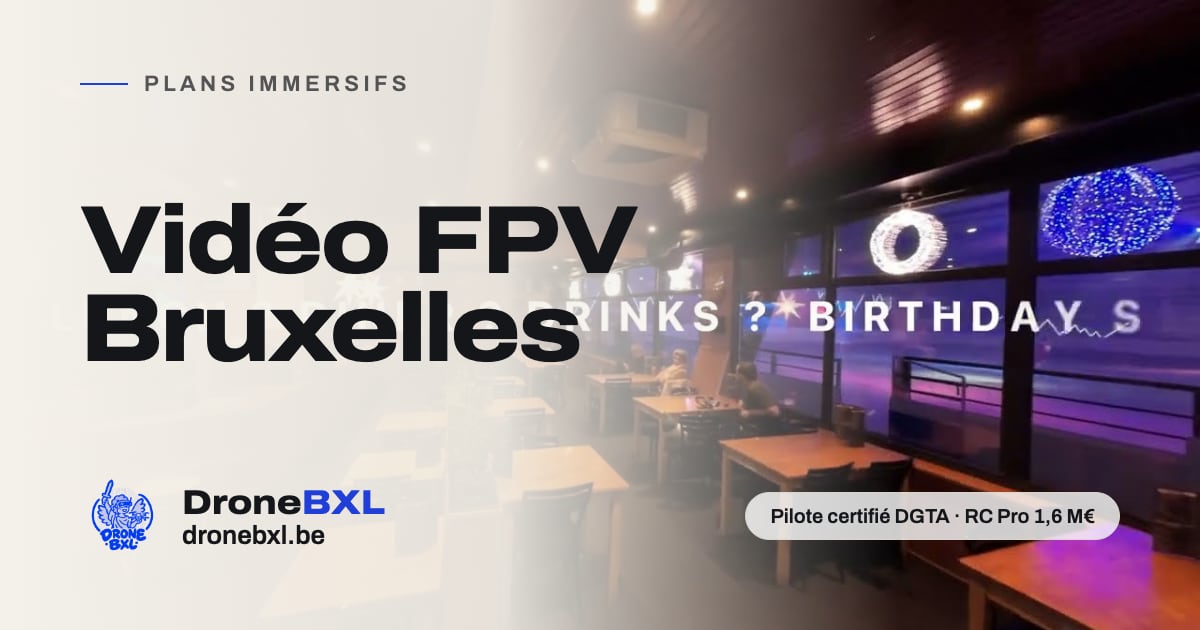
You are planning a video. One question always comes up. Standard drone or FPV drone? Both film well. They do not tell the same story.
This article compares them in the field. Sensor, stabilisation, safety, wind, budget, editing. No push towards FPV for its own sake. The standard drone is often the right call. You will see when.
Two machines, two flight logics
The standard drone holds its position. GPS, distance sensors, automatic hold. Let go of the sticks and it stays put. The pilot frames the shot. The aircraft handles balance.
FPV means flying in immersion. The pilot wears goggles. They see the camera feed live. With the DJI O4 Air Unit Pro and Goggles 3, DJI quotes latency down to 15 ms in racing mode.
In acro mode nothing self-levels. The pilot holds the aircraft by hand, constantly. That gives continuous movement. It also takes hundreds of flight hours.
- Standard drones: DJI Mavic 3 Pro Cine, DJI Mini 5 Pro.
- Ducted cinewhoops: GEPRC CineLog35, GEPRC CineLog25, OddityRC XI25 Pro, BETAFPV Pavo20 Pro.
- Indoor micro: Flywoo Flytimes 85, for very tight gaps.
- Outdoor and long range: iFlight Chimera7 Pro V2, plus a hand-built 5-inch.
Sensor and stabilisation: what really changes
The Mavic 3 Pro Cine carries three cameras. The main one uses a 4/3 CMOS Hasselblad sensor of 20 megapixels. Two tele lenses complete it: a 1/1.3-inch 48 MP and a 1/2-inch 12 MP.
It films in 5.1K up to 50 frames per second. The Cine version records Apple ProRes 422 HQ to a 1 TB internal SSD. The gain shows up in the grade.
FPV carries something smaller. The DJI O4 Air Unit Pro weighs about 32 g with its camera. Its sensor is 1/1.3-inch. It films 4K up to 120 frames per second, in D-Log M. Our indoor flights record up to 5K.
Stabilisation differs too. The standard drone uses a mechanical gimbal. FPV stabilises in software: RockSteady 3.0+, or Gyroflow in post. The result is clean. It costs a little field of view on the crop.
Indoors: ducted props and no GPS
Indoors, GPS stops answering. The standard drone loses its position hold. It drifts along the walls. FPV flies without GPS by design. The pilot holds the aircraft.
Cinewhoops carry ducts around the propellers. They cut the risk when the aircraft touches a wall, a piece of furniture or a person. That is not a guarantee. It is a real safety margin.
Those ducts have a cost. They add weight and drag. Endurance drops. So we shoot in short runs, battery after battery.
The airframe matches the room. A CineLog35 crosses a wide corridor. A 2.2-inch Pavo20 Pro slips in further. A Flytimes 85 flies between two shelving units.
When the standard drone is the right call
Stability saves time. The frame stays level. The horizon stays clean. For a property listing, that is often all you need.
The Mavic 3 Pro Cine handles wind up to 12 m/s. Its obstacle sensing is omnidirectional. Its rated flight time reaches 43 minutes. A cinewhoop does not compete there.
The Mini 5 Pro weighs under 250 g with a 1-inch sensor. That weight changes the constraints of flying in town.
- Wide property shots: steady height, clean frame, fast turnaround.
- Roof inspection: slow flight, held position, tele lens to keep your distance.
- Windy day: the standard drone holds, the cinewhoop struggles.
- Tight budget: fewer takes, less editing, quicker delivery.
- Cramped room with nothing to move through: a locked-off shot is enough.
When FPV is the right call
A single continuous take changes how a place reads. The viewer moves with the camera. They understand the distance between rooms. A cut-together set of static shots does not do that.
FPV also keeps up with a fast subject. A runner, a bike, a car, a dancer. A gimbal drone falls behind. FPV keeps the subject framed.
For wide outdoor work, the Chimera7 Pro V2 flies up to 30 minutes on a 6S 8000 mAh pack. That is rare on an FPV machine.
- Indoor walkthrough with no cut: room, corridor, staircase, one take.
- Moving subject: the frame travels at the subject's speed.
- Video opener: the first three seconds must hold attention.
- Sport and action: the movement is part of the subject.
Decision table
One line per situation. The drone we would use, then why.
- Standard property listing → standard drone, because the steady wide shot sells the place.
- Indoor walkthrough in one take → FPV cinewhoop, because it crosses rooms without a cut.
- Roof or facade inspection → standard drone, because the tele lens keeps you at a distance.
- Windy day → standard drone, because it holds the frame up to 12 m/s.
- Sport or a moving worksite → FPV, because it tracks the subject at its own speed.
- Corporate film opener → FPV, because motion grabs from the first second.
- Tight budget, three simple shots → standard drone, because shooting and editing are shorter.
- Small room, still subject → standard drone or a ground camera, because movement adds nothing.
- Occupied venue with people around → ducted cinewhoop, because the safety margin matters.
- Low-weight flight in town → DJI Mini 5 Pro, because it stays under 250 g.
How to choose in three questions
Three questions settle it nearly every time. Answer them in order.
Often the right answer mixes both. A wide shot on the Mavic 3 Pro Cine to place the location. A walkthrough on the CineLog35 to carry the viewer. Then ground-level detail to close.
DroneBXL flies both, in Brussels and across Belgium.
- 1. Does the location call for movement? If the video must carry the viewer forward, choose FPV.
- 2. Does the subject move? A fast subject needs FPV. A static building does not.
- 3. Which constraint dominates: wind, safety, budget or deadline? That one decides the rest.
Sources
A specific question about your project
Ask it directly. We reply within 24 hours, free quote included.